The Future Is Here Today

The Future Is Here Today
Where Business, Nature and Leisure Provide An Ideal Setting For Living

Advertise in Almere-Digest

Advertising Options

April 12, 2016

EU Rule of Law Crises: Europe’s Rule-of-Law "obstructed by Hungary and Poland "- by Guy Verhofstadt

Rule of Law - one of the basic princiles of Democracy
From the rubble of two world wars, European countries came together to launch what would become the world’s largest experiment in unification and cooperative, shared sovereignty. But, despite its impressive achievements over the decades, the European project now risks disintegration.

An unresolved financial crisis, a refugee crisis, a deteriorating security environment, and a stalled integration process have created throughout Europe a toxic, unstable political environment in which populism and nationalism thrive. Perhaps the clearest manifestation of this is the erosion of the rule of law in the European Union.

Two EU members in particular, Hungary and Poland, are now jeopardizing hard-won European democratic norms – and thus undermining the very purpose of European integration.

In Hungary, liberal-democratic values have come under systematic attack from Prime Minister Viktor Orbán’s government. Since his return to the premiership in 2010, Orbán has committed Hungary to an authoritarian nationalist path, and he has exploited the refugee crisis to cement a “siege mentality” that helps him sustain popular support.

In the process, fundamental rights have been ignored, media freed refugees have been demonized, and Orbán is doing everything in his power to weaken the EU. Attempts by EU institutions to convince Orbán to change course have only emboldened him to commit further outrages against democratic norms.

Meanwhile, a democratic crisis has emerged in Poland as well, starting last October, when the Law and Justice (PiS), a Euroskeptic party that also opposes immigration, secured an outright parliamentary majority by promising to implement populist economic policies and “put Poland first.” Yet, since the election, PiS has launched a series of attacks on the Polish constitution itself.

Government legislation aimed at reforming Poland’s Constitutional Court has been condemned by the Court itself and the European democracy watchdog, the Venice Commission. The government has effectively precluded the Court from ruling on the constitutionality of legislation. This weakens a key pillar of the democratic rule of law – and thus is highly problematic for Poland and Europe alike.

Hungary and Poland are the leading edge of a far-right agenda that has taken hold throughout Europe, pursued by parties that are exploiting the political vacuum created by the EU’s failure to address the financial and refugee crises. So how can the tables be turned?

In democratic countries, it is vital that democracy’s enemies be fought with democratic means. It is vital that the outside world impress on the Hungarian and Polish people themselves that in a globalized world, nationalism offers only false security and economic irrelevance. Both countries, at the heart of Europe, have profited enormously in every sense from EU membership; they must not throw away their opportunity to make further progress.

Hungarians and Poles rejected international isolation in 1989. After the fall of the Iron Curtain, both countries became staunch NATO allies even before they joined the EU. The geopolitical and security arguments for European unity are overwhelming, and there can be no united Europe without Hungary and Poland.

But all of us, and in particular the peoples of Hungary and Poland, must remember that NATO, like the EU, was founded on the fundamental principles of democracy, individual liberty, and the rule of law. A government that flouts those principles jeopardizes the coherence and solidarity of the alliance. It is therefore vital that the United States and other NATO allies speak out now and insist that functioning democratic checks and balances are safeguarded. It would be unimaginable for NATO heads of state to go ahead with their planned leadership summit in Warsaw in June if Poland remains in its constitutional crisis, with the government disregarding the rule of law and the opinion of a respected international body.

Hungarians and Poles must be reminded that Russian President Vladimir Putin is actively attempting to divide and weaken the EU and NATO. If Europe is to face down aggression from the Kremlin, it is essential that Poland and Hungary adhere to these groups’ fundamental values and principles.

But it is also necessary that the EU itself develop a more comprehensive mechanism for safeguarding the rule of law within the Union. The EU has mechanisms to regulate economic policies, safeguard the environment, and police the Single Market. But Europe has always been much more than an economic project; it is also a union of values, which no member can be allowed to repudiate without consequence.
Governments are created and fall apart, and politicians come and go; but democratic institutions should be spared from political interference. The sad reality is that, were they to apply for EU membership today, neither Hungary nor Poland would be admitted. Their people should weigh carefully what that means. 

Their current leaders claim to be defending national interests. But is it really in their countries’ interest to be sidelined by the US, NATO, and the rest of Europe?

Note EU-Digest: Guy Verhofstadt, a former Belgian prime minister, is President of the Alliance of Liberals and Democrats for Europe Group (ALDE) in the European Parliament. 

NATO's Planned June Leadership in June should be cancelled if Hungary and Poland  both continue to obstruct  the fundamental principles of democracy, individual liberty, and the rule of law on which not only the EU was founded but also the NATO.
EU-Digest

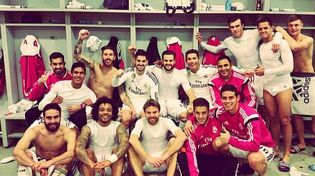
Soccer: The Netherlands: Dutch socer team Almere City create brilliant response to Real Madrid's El Clasico photo

Real Madrid - los Blancos
After defeating Barcelona last week, Los Blancos posed for a photo – with Cristiano Ronaldo particularly noticeable on the outskirts.

Now Almere City, a Dutch second division team have created a brilliant response to Real Madrid’s El Clasico dressing room photo. with hilarious consequences

Picture: Dutch side hilariously recreate Real Madrid El Clasico photo
Almere City -"Copy Cats"
Second choice goalkeeper Roy Pistoor has taken the place of Ronaldo, and the 27-year-old doesn’t look quite as in shape as the Portuguese superstar.

Now that they’ve nailed Madrid’s antics off the pitch, Almere are sure to want to copy their success on the field.


Almere-Digest

April 11, 2016

EU Report On Drug Trade: The Netherlands remains major European drug trader

The re-designed  Dutch Flag
A new EU report on drugs says the Netherlands remains a main hub for drug production and trafficking across Europe. The in-depth analysis, published last week, says EU citizens spend more than €24bn a year on drugs, 38% of it on cannabis.

The Netherlands and Spain are major hubs for cannabis and cocaine trafficking, while Holland and Belgium are Europe’s leading producers of ecstasy and amphetamines. Europol and the European Monitoring Centre for Drugs and Drug Addiction, which authored the report, say the drugs trade is getting more sophisticated, globalised and with production increasingly nearer to home.

According to the Parool, it is a pat on the back for Dutch criminals’ ‘innovation and entrepreneurial spirit’. The paper reports that the vast majority of ecstasy taken in Europe and the US comes from labs mostly in the south of the Netherlands, while about half of the €5.7bn a year of cocaine taken in Europe comes through Rotterdam. In 2014, Rotterdam port handled 7.4 million containers, and the report adds: ‘It takes about three minutes for traffickers to illegally open a container and retrieve a consignment of…100 kg of cocaine distributed in four or five duffel bags.’

Organized crime and international violence are characteristic of the drug trade, and crooks help one another too, offering ‘crime-as-a-service’. The report notes a rise in Dutch ‘grow shops’ that sell what you need to cultivate cannabis, and sometimes buy your harvest too – possibly operating online as the police crack down. It also looks at the environmental impact of drug production, with toxic waste dumped at 157 sites in the Netherlands in 2014.

Cannabis is the most frequently taken drug, with 1% of European adults using it on an almost daily basis, and 22 million adults in the EU taking it in the last year. While most people consume cannabis grown in the EU, resin from Morocco has also been ‘increasing in potency and may be trafficked to the EU alongside other illicit goods and human beings, a trend potentially exacerbated by instability in North Africa and the Middle East’, the report says.

Heroin is the number two drug, estimated to be worth €6.8bn a year and responsible for a “significant proportion” of deaths and social costs. Meanwhile, cocaine is Europe’s most commonly used stimulant, with coca cultivation on the rise.

Note EU-Digest: European (Dutch) policing of drug trade and drug traffickers not functioning properly and seemingly not properly coordinated on a European level.. 

The Netherlands remains major European drug trader: EU report - DutchNews.nl

Economic Mission: Dutch Companies Invited to Apply for Economic Mission to Miami - April 17-20

Dutch companies that specialize in innovative solutions in life sciences, healthcare, and sustainable urban solutions are invited to join an economic mission to Miami April 17-20 that will explore opportunities to collaborate with their counterparts in the US and Latin America.

Lilianne Ploumen, the Netherlands’ Minister for Foreign Trade and Development Cooperation, will lead the mission with the Netherlands Enterprise Agency, the Netherlands Network for Innovation, Technology and Science, and the Miami Consulate General of the Netherlands.

The mission is intended to introduce and connect promising Dutch IT-driven innovations in life sciences and healthcare to counterparts in the United States and Latin America.Companies and knowledge institutions that are active in sustainable urban solutions, healthcare IT, educational tools in healthcare, or other high-tech solutions with medical applications are welcome to join this mission. IT companies that focus on entertainment, media, gaming, educational technology and finance will also be present at the eMerge Americas conference.

As part of the mission, participants will have the opportunity to attend the eMerge Americas Showcase/Conference April 18-19 and take part in matchmaking and company visits on April 20. IT companies that focus on entertainment, media, gaming, educational technology and finance will also be present at the eMerge Americas conference.

eMerge Americas is a unique platform for the advancement of technology, a forum for idea exchange, and a launching pad for innovations to Latin America, North America, and Europe.

The Netherlands Consulate General in Miami sees opportunities for the Dutch IT and life science and health sectors specifically for the rapidly emerging opportunities in healthcare in the U.S. and Latin America.

Think you might be onto something? Showcase your innovation at eMerge Americas in Miami and compete with other startups from around the globe. With hundreds of angel investors and venture capitalists on the expo floor, the exposure alone is powerful. Winning has its perks, too — up to $175,000 in cash and prizes.

The Netherlands Consulate General in Miami is helping Dutch startups to showcase their technologies. Email Barbara Staals, Miami Consulate General of the Kingdom of the Netherlands, to learn more.

See also: Learn more about the mission (in Dutch), including instructions to apply.and watch video eMerge Video.

Insure-Digest

Netherlands Judiciary: Debt collection agencies poorly regulated and out of control

Dutch Collection Agencies are  out of control
Dutch consumers who find themselves in a debt collection process are not only harassed  by the debt collection agencies,who are poorly regulated in the Dutch judicial system, but will  usually end up deeper in debt.

This shocking finding has become evident from an analysis made by the Dutch Consumer Association (Nederlandse Consumentenbond) of complaints they received at their "Debt Complain Center hotline" which was opened in the spring of this year. On this Hotline more than 200 personal, often deeply disturbing and emotional stories, have disclosed how inhumane people are treated .

The Consumers Association says the situation is totally out of control and Bart Combée, Director of the Dutch consumer association says: “the human dimension in this process is completely lost.

When consumers want to contact the collection agency, they often get no answer or the door slammed in their face. If the collection train starts running, the consumer can usually not stop it, other than by paying”.

The most common complaints about the Dutch debt collection processes are, rapidly increasing and not clearly specified costs. Threatening letters about wage garnishment, foreclosure sales or lawsuits. Even while  the debt collection agencies re not empowered to do so, or when it only concerns a debt of a few euro's.

The Consumer Association wants the Judiciary to establish clear and precise regulations concerning the
procedures to be followed by Dutch collection agencies and also want the Judiciary to firmly intervene when collection agencies violate the rules. It also recommends that companies, collection agencies and bailiffs should be more accessible and willing to offer more customization to the process.

It also wants to see that the intimidating behavior of the collection agencies to be addressed immediately..

Bart Combée, Director of the Consumer association says: 'The human dimension is totally lost in this particular area of the law".

When consumers want to contact the collection agency, they often get no answer, or the door slammed in
their face.

In the Netherlands - once the collection train starts rolling, it wont stop, other than by paying, usually a lot more than expected. This regardless if one disputes a claim".

Dutch law on debt collection (under the hereditary responsibility clause)  even allows claims to be made to people whose debts are not theirs, but debts owed by family members ( parents) who had deceased  

These outdated Dutch legal laws, unfortunately, still remain on the Judicial books in the Netherlands The Dutch Consumer Agency  wants the Netherlands parliament to intervene in this matter but so far noting really concrete or significant has happened.

 Almere-Digest

Netherlands doesn't have enough criminals to fill its prisons as crime to drop - by Senay Boztas

Average Dutch prison cell
The Netherlands is suffering an unusual crime problem: there isn’t enough of it to fill prisons.

Figures from the Dutch ministry of justice released on Monday suggest overall crime will drop by 0.9 per cent a year in the next five years.

Since a third of its 13,500 prison cells are unfilled, this means five prisons will definitely close, and the prison workers' union, FNV, fears 1,900 jail workers will lose their jobs, while 700 could become “mobile” employees based in more than one location.

“More than a third of cells are not used, and the predictions are that it is going to get worse,” said Jaap Oosterveer, a spokesman for the ministry of justice. “Obviously, from a social perspective, it is better because crime is down, but if you work in jails, it is not good news.”

The Netherlands has been innovative in trying to solve its jail problem. It has “leased” spots in jail to Belgium and Norway, so around 300 Belgian criminals have been held at His Dutch Majesty’s pleasure in Tilberg prison.

 Meanwhile, the country signed a new three-year deal with Norway last September, with 240 Norwegian convicts taking up residence at Norgerhaven jail in the prison village of Veenhuizen in Drenthe.

Karl Hillesland, Dutch prisons' director, told the country's broadcaster RTV Drenthe last month that there is even a “small waiting list”, partly due to the success of promotional films shown in Norway.

Everything happens in English, and Mr Hillesland added: “I think the basic values and what we mean about how a sentence should be served is about the same.”

• Crime set to soar overnight as 'cyber' offences included in official total for first time

But, Mr Oosterveer said, this does not solve the “structural problem” of falling crime and extensive prison accommodation, leading to the new plans to close prisons and cut jobs.

The drop in prison sentences is attributed to an older population – less likely to commit crime – and steep fall in violent offences that lead to prison sentences. There are shock exceptions such as the decapitation of Nabil Amzieb two weeks ago in suspected gang violence in Amsterdam, but figures from the Dutch statistics office, the CBS, show a dramatic 10-year drop in crime victim rates.

 One notorious Dutch prison, Het Arresthuis in Roermond, near the German border, has found a new life as a luxury hotel. Margje Spätjens, a spokeswoman, said if more defunct prisons followed suit, “we have set a good example of what they can do”.

She added. “The reaction from guests is mostly positive, although some people are a bit anxious.”

However one Dutch MP Nine Kooiman, told Telegraaf newspaper: “If the government really worked at catching criminals, we would not have this problem of empty cells.”


Read more: Netherlands doesn't have enough criminals to fill its prisons as crime to drop - Telegraph

April 9, 2016

Global warming: NASA: Global warming now changing how Earth wobbles - AJE News

Global warming is shifting the way the Earth wobbles on its polar axis, a new NASA study says, highlighting what one expert said is the "large" impact humans have on the planet.

According to the study published on Friday in the journal Science Advances, melting ice sheets - especially in Greenland - are changing the distribution of weight on Earth.

As a result, both the North Pole and the wobble, which is called polar motion, have changed course.

"The recent shift from the 20th-century direction is very dramatic," said Surendra Adhikari, lead author at NASA's Jet Propulsion Lab.

While scientists said the shift is harmless, it is meaningful.


Read more: NASA: Global warming now changing how Earth wobbles - AJE News